Adult Content Advertising Policies & Limits 2026
Meta Description: Master adult content advertising compliance. Learn platform policies, creative limits, and strategies to keep your ads running without bans. You’ve spent weeks perfecting your campaign. The copy is sharp, the vis…
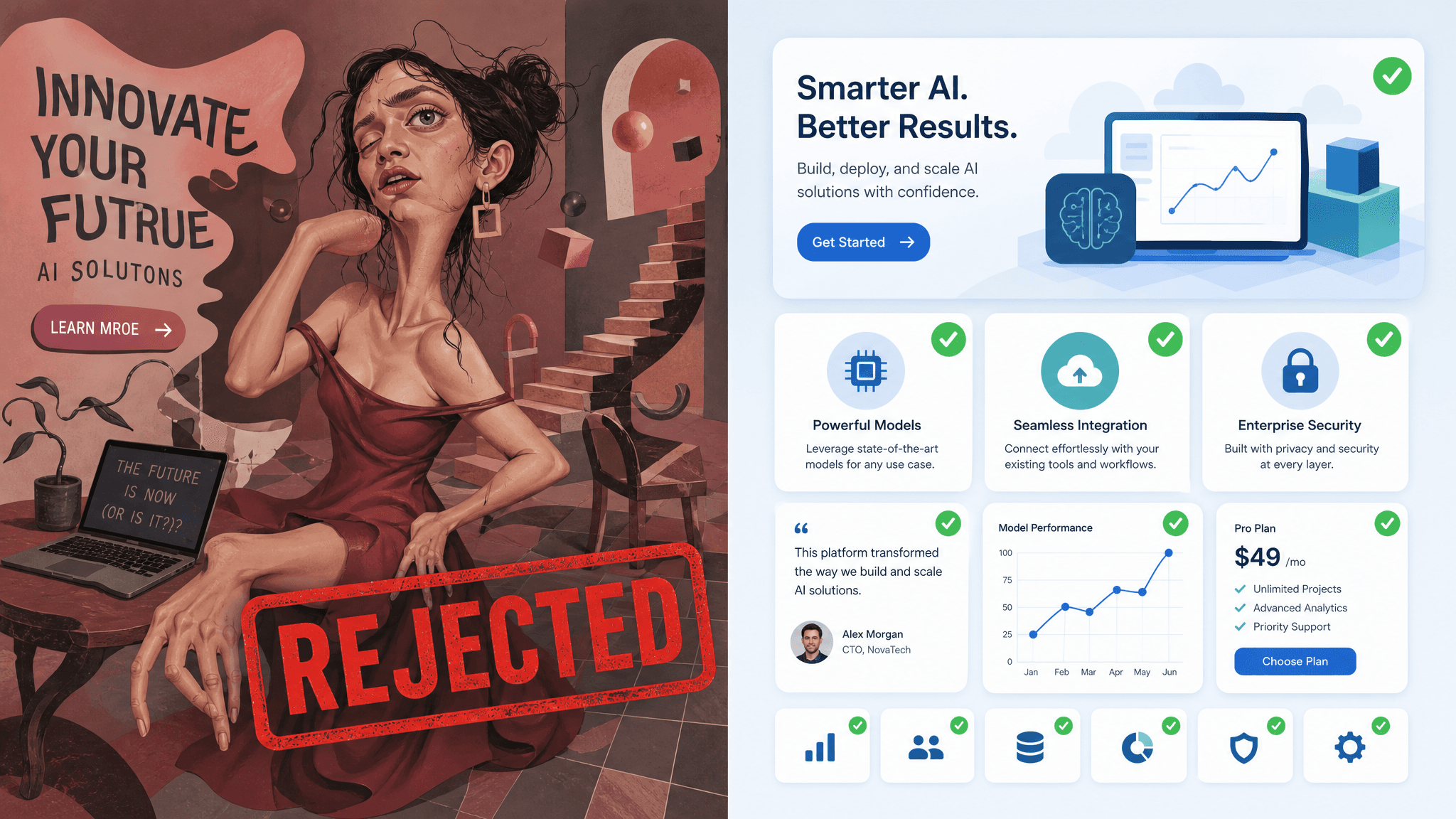
Adult creative gets rejected on what the image shows, not on what the campaign is selling. The networks have spent years teaching their models to read skin, pose, and framing, and the model does not know your brand has a compliant offer behind the ad.
That is why a campaign can be legal, tasteful, and still banned before lunch. The rules differ between mainstream platforms and adult networks, the review is automated on both, and the creative is where most accounts are lost. Here is how the policies actually work and what to build instead.
Mainstream platforms and adult networks are two different systems
Digital advertising splits into mainstream platforms (Google, Meta, TikTok) and adult networks (ExoClick, TrafficJunky, EroAdvertising). The policies, the review models, and the tolerance for a suggestive frame are not comparable.
Mainstream platforms operate on a family-friendly mandate. They are managing their own brand relationships as much as local law: a major consumer advertiser appearing beside an adult ad is a problem they will not accept. Meta reviews an ad volume no human team could check, and adult content and social issues get a conservative reading even when the offer behind them is ordinary.
For an adult advertiser that means the error margin on a mainstream platform is effectively zero, and the model reviewing the ad is tuned conservative by design.
Google's restricted line
Google does not ban sexual content outright. Its policy reads: "Google Ads restricts certain kinds of sexual content in ads and destinations, which will only show in limited scenarios based on user search queries, user age and local laws where the ad is being served." In plain English: your creative can be compliant and still be limited to a narrow slice of inventory, which for an adult advertiser is close to not running. The boundary is applied by a model that reads no context.
The landing page matters as much as the ad. A compliant creative pointing at a page with one explicit thumbnail in the footer can get the whole domain blacklisted. Auditing destination URLs for hidden triggers is part of the job, not an afterthought.
Why the niche networks are stricter than they look
Adult networks are constrained by their payment processors. Card networks and banks set content standards, and a network that loses processing cannot operate. That is why softer creative often performs better even on adult inventory: the network is protecting a financial pipeline, not making a moral judgment. If the creative is too aggressive, it gets rejected to keep the account with the processor open.
Three reviews, not one
An adult campaign is checked at three levels, and teams usually prepare for only the first.
The creative. Frames are scored for exposed skin, pose, and implied nudity. This is the review everyone expects, and the one the classifiers have become best at.
The destination. The page is crawled for content that contradicts the ad, for missing age gates, and for the redirect pattern known as cloaking. A clean ad behind a dirty page fails.
The account. History accumulates. A payment dispute, a rejected appeal, or a pattern of borderline creative raises the scrutiny applied to everything uploaded afterward, which is why two advertisers can submit the same asset and get different answers.
Knowing which level failed is the difference between fixing the ad and rebuilding the funnel. The rejection notice rarely says, so check all three before you resubmit.
Production choices that reduce risk before review
Most rejection risk is decided on set, not in the ad manager. Frame the shot for the crop the placement requires, and keep the subject's posture and wardrobe inside what the platform will accept at the tightest crop, because the square and vertical versions are reviewed as separate assets.
Shoot the lifestyle version at the same time as the direct version. If the campaign needs a clean frame for a mainstream placement and a suggestive frame for an adult network, having both from one production day is cheaper than reshooting after a rejection.
Keep the first frame calm. Many review systems sample the opening frame and the captions first, so leading with the most explicit moment of the video loads the risk at the front of the file.
Creative: what the review model sees
Creative is both the biggest liability and the only real lever. The goal is a frame that is suggestive enough to earn the click and clean enough to pass review.
The old tricks are dead. Blurring and emoji covers were learned by the classifiers years ago, and the models now read partial exposure as reliably as they read a naked frame.
What survives review is lifestyle framing. If you promote a dating app, show the result of the connection, two people laughing at a bar, rather than the process. Professional photography that hints at intimacy without depicting it outlasts explicit creative because the account stays open long enough to spend.
Copy that passes the filters
Copy is scanned by natural language processing, and the obvious words (sexy, hot, NSFW) are immediate flags on mainstream filters.
Curiosity-gap headlines perform better in regulated categories, and they read as copy rather than as a solicitation. "The Secret to Better Connections" gets read by a person and does not trip the adult classifier. It also keeps the account out of the manual review queue that explicit wording creates.
The landing page is where accounts die
A compliant ad pointing at a non-compliant page fails. Platforms crawl from the click to the conversion, and they score the whole path.
The common mistake is a bridge page: a clean page that redirects to an offer that would never pass review. That is cloaking. It may survive a few days, and it ends in a permanent ban on the hardware and the IP. Modern crawlers follow the redirect in milliseconds.
The destination is where the account gets lost. An ad can be clean and still fail because of what sits one click behind it.
Run the checks in this order before every submission:
- Does the page show a visible 18+ age gate before any content loads?
- Are terms and conditions reachable from the footer, on every page in the funnel?
- Is the domain clean, with no history of malware or spam flags?
- Does the page content match the promise in the ad, including the offer and the price?
- Is there a working way to leave the site, without an unclosable overlay?
If any answer is no, the campaign is not ready. Fixing the page is cheaper than the appeal, and the appeal is not guaranteed.
Before you submit, confirm the page has a visible 18+ age gate, terms and conditions reachable from the footer, a domain with no prior malware or spam flags, and content that matches the promise in the ad.
Pre-screening with the same tools that reject you
Volume has outgrown human review. The networks use models because no team could read that much creative, and the same logic applies to your side of the exchange.
Compliance-focused AI can pre-screen an asset and return a heat map of where a classifier is likely to flag nudity or suggestion. That lets you make a small correction, a crop moved an inch, a different adjective, before the ad is submitted instead of after a rejection.
HawtAds builds those checks into the creative workflow, so the asset is tested against category rules before it is exported. The point is to stop guessing what the review model will see.
Testing creative without losing the account
Test one variable at a time, and treat the safe version as the control. The instinct in adult creative is to push the frame further when performance drops, which is how accounts collect flags. The better move is to test the promise, the headline, and the crop while the level of suggestion stays fixed.
Keep a record of what was rejected and why. After a few months that record is more useful than any policy summary, because it describes your category, your imagery, and your account history rather than the general rule.
Retention follows the same logic. A customer acquired through a clear promise stays longer than one acquired through a frame that oversold, and longer retention is what makes a compliant funnel cheaper over a year than a clever one.
Building something that lasts
Platform rules will change again. The accounts that survive treat distribution as rented and build one channel they own.
Use paid ads to move people to an email list or a Telegram channel. The adult ad platform rules can change next quarter, and a direct relationship with the audience does not. Ads are the top of the funnel, not the whole funnel.
The white-hat route
Transparency with platforms is the more profitable strategy over time, even where it looks slower. Read the guidelines, follow them to the letter, and give the user something real. Campaigns run that way last longer than campaigns built on borderline tactics, because they do not spend their life in the appeal queue.
A two-day spike is worth less than two years of steady traffic, and only one of them compounds.
None of this is a reason to accept a worse ad. The compliant version of an adult campaign is not the timid one; it is the one that puts the promise in the copy and the suggestion in the framing, so the image does not have to carry the whole job.
Conclusion
Advertising adult products is an operational discipline: know the difference between what is legal and what a platform will accept, lead with suggestion rather than exposure, keep the funnel as clean as the ad, and use software to catch what a human cannot check at volume.
At HawtAds, we build the compliance checks for teams working in categories with strict platform rules, including adult, and we apply them at creation time rather than after a rejection. The rules will keep moving. The workflow that reads them before you upload is the part you control.