Google's 2026 Crypto Ad Policy: What Exchanges, Wallets & DeFi Projects Need to Know
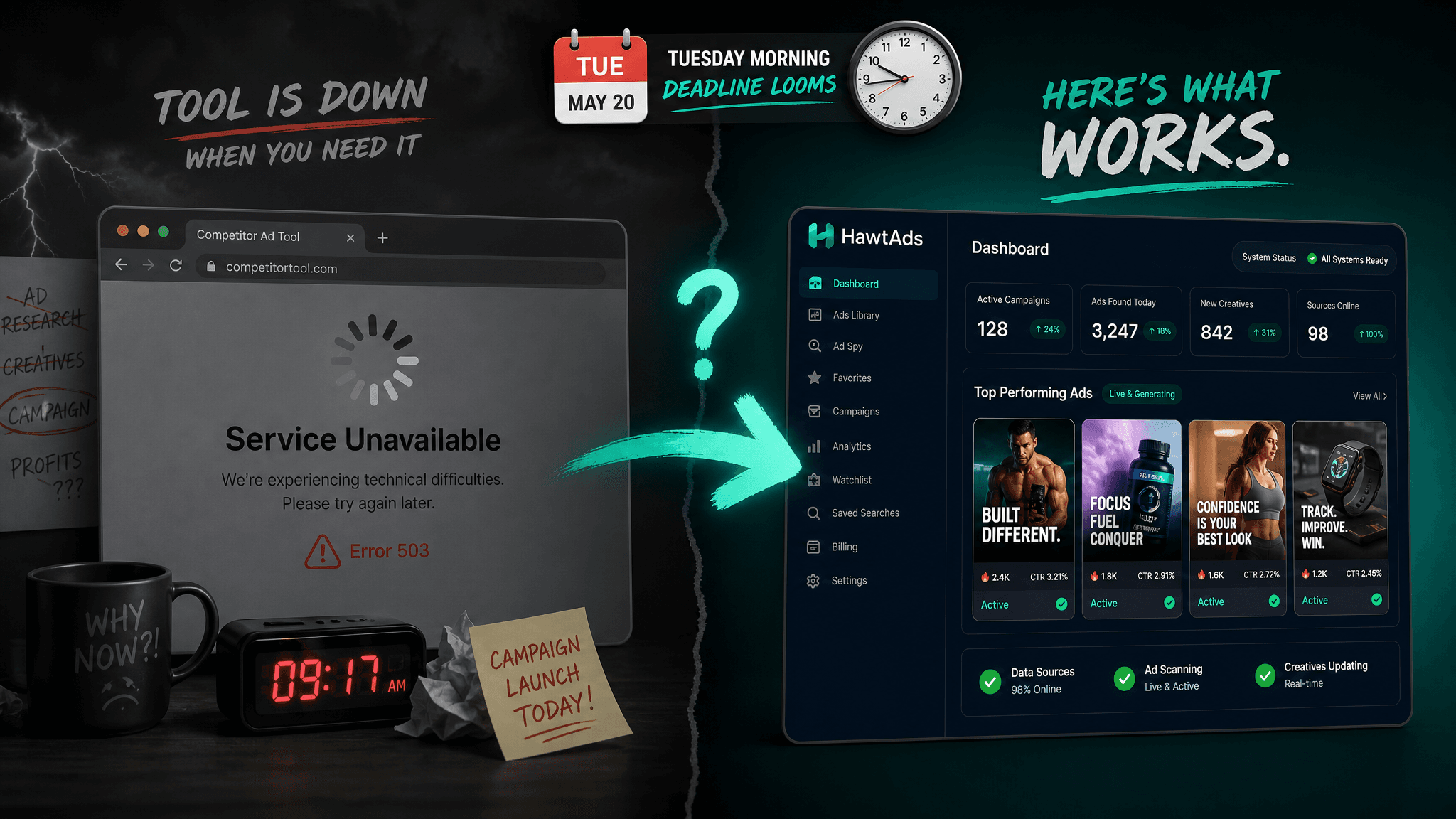
Imagine this: It’s Monday morning, and you’ve just launched your most ambitious campaign of the year. Your creative team spent weeks perfecting the visuals, and your media buyers have optimized every cent of the budget. But by 10:…
Google decides most crypto approvals without a human
Google is expected to automate over 95% of its ad moderation by 2026, using models that read copy and images in milliseconds. Your media buyer's manual pre-check no longer matches the system that judges the ad, and the trial-and-error method of finding out what passes is finished.
For a crypto exchange, compliance is no longer about avoiding a warning. A disapproved ad costs a day of spend. A pattern of disapprovals costs the account, and with it the channel.
The 2026 policy moves in one direction: fewer blanket bans, more region-specific certification, and enforcement that reads the landing page as carefully as the creative. An ad that runs in Miami can trigger a permanent ban in Munich.
That changes the job of the policy team. Each market needs its own certified asset set, and the set is only as good as the documentation behind it. Teams that treat certification as an annual filing find out halfway through a launch that a new market was never covered.
Scale puts that in perspective. Google's 2023 Ads Safety Report puts it this way: "In 2023, we blocked or removed over 5.5 billion ads, slightly up from the prior year, and suspended 12.7 million advertiser accounts, nearly double from the previous year."
The Wild West creative is dead
The rocket ship and "to the moon" drove click-through in a market that no longer exists. Under the current Google Ads crypto guidelines, speculative imagery is scrutinized, and the system can interpret the intent behind an image. A creative that implies a guaranteed return, or uses visual metaphors for rapid wealth, is flagged before a human sees it.
The reason is liability. Google is now held partly responsible in some jurisdictions for financial harm caused by misleading ads, so it makes aggressive marketing harder to run. The question for a creative team is whether the ads are built for the audience of 2021 or the regulators of 2026.
Research shows that ads using "get rich quick" tropes have a 98% higher rejection rate than ads focused on platform security and interface quality. Utility over hype is the safer line and also the cheaper one.
Certification is the entry ticket
Crypto exchange advertising now requires a multi-layered certification process. Holding a licence in the country where you are headquartered is not enough. You need Google-Verified status for every territory you target.
That means submitting documentation on your anti-money laundering and know-your-customer protocols to Google's compliance portal. The grey-list route into smaller markets has closed. In 2026 the system is binary: certified, or invisible.
Three requirements cause most of the delay:
- Local licensing. You must hold a valid registration with the relevant financial authority, such as the FCA in the UK or FinCEN in the US.
- Third-party audits. Google may require proof of security audits for the exchange.
- Landing page consistency. The landing page must mirror the transparency of the ad, including the risk warnings the ad itself carries.
The commercial case is easier to argue than to measure. Certification does not buy auction priority: it buys the right to bid at all in a market where uncertified competitors cannot.
MiCA is the template
The Markets in Crypto-Assets regulation is European law, and Google is using it as the blueprint for its global cryptocurrency ad rules. The Brussels Effect means that even without targeting the EU, you should expect the same disclosure and consumer protection requirements worldwide.
Expect to supply detailed whitepapers for every asset mentioned in an ad, and expect ads for specific tokens to link to a standardized disclosure document. It is a heavy lift and it is the price of entry to the largest search engine.
There is an efficiency on the other side. Since the rollout of MiCA-aligned policies, approval times for compliant exchanges have shortened, because the documentation is standardized.
AI moderation against AI creative
The biggest change is not a written rule. It is the technology enforcing the rules. Google uses Gemini-based models to scan ad copy, video scripts, and the fine print on landing pages. The system reads sentiment and context rather than matching banned keywords.
If the ad says "trade with ease" and the landing page suggests users can quit their day jobs, the discrepancy is caught. That kind of cross-channel reading was impractical five years ago and is standard now.
The volume gap is the problem. By 2026, Google's moderation is expected to be 50 times more efficient than the manual reviews of 2022. A compliance team with a spreadsheet is not competing on the same timescale.
That changes what a review is for. The model is testing whether the creative and the landing page tell the same story, so the approval work sits with whoever writes the copy and whoever maintains the page. Those two people are rarely in the same meeting, which is the actual source of most rejections we see.
The shadow flag
The harder failure is the shadow flag. The ad is not disapproved, and reach is throttled because the system rates it borderline. Impressions can drop by 80% with no clear explanation in the dashboard, usually after a pattern of high-risk behaviour across the account history.
The defence is consistency. The 2026 algorithms reward accounts that show a long-term commitment to compliance, and every attempt to sneak a questionable ad past the bots damages the account's trust score. Accounts with a clean enforcement record get smoother approvals than accounts with a history, which shows up in delivery as much as in price. Compliance is a pricing advantage as much as a legal requirement.
Watch delivery rather than disapproval. A sudden drop in impression share with no policy notice is the signal, and by the time it appears in a weekly report the account has usually been throttled for days.
What to fix in the creative library
Start with an audit. Anything using FOMO, countdown timers, or "guaranteed" language needs to come out. Educational, security-first and how-to content outperforms moon-shot creative in 2026, and it clears review on the first pass.
Then localize. You cannot run the same ad set in Singapore as in New York, because the policy is hyper-local. The stack has to swap risk disclosures and legal disclaimers based on the user's location in real time, not by hand at the start of a campaign.
The budget argument is familiar to anyone who has run a fintech team. In a 2025 marketing survey, 65% of fintech CMOs named regulatory hurdles as their number one barrier to growth. The 35% who were not worried had already invested in automated compliance tools.
Test the compliant version before you delete the old one. In most accounts the security and interface creative wins on cost per funded account, and a two-week test settles the internal argument faster than a policy memo.
Monitor policy, not only performance
Policies change without a product announcement. In 2024 alone, Google updated its financial products policy over a dozen times, and updates are expected to be more frequent by 2026. A team checking policy pages once a month is already behind.
You need a living compliance layer: one that tracks policy changes and flags live creative that no longer aligns. The alternative is the suspension domino, where one flagged asset freezes a department for weeks. A single day of suspension for a major exchange can cost over $500,000 in potential lifetime value from new sign-ups.
How HawtAds fits
The way to scale in a regulated market is to take human error out of the compliance pass, which is the part of the workflow that breaks when volume rises.
HawtAds is a general ad creation tool with additional features for regulated verticals, including a pre-check that tests creative against current Google requirements before publish. That covers the common failure modes without asking the team to become policy specialists.
- Automate policy checks. The pre-check tracks current regulation so the team does not maintain the list by hand.
- Scale across jurisdictions. Disclaimers and visual elements adjust for each market rather than being rebuilt per campaign.
- Protect the account. Shadow-flag triggers get caught in draft, before they accumulate into a trust-score problem.
The takeaway
Compliance is the optimization now. The best-performing crypto ads in 2026 will not be the ones with the flashiest graphics. They will be the ones the algorithm trusts.
Audit the account, get the regional certifications in order, and put a tool in front of the publish button that runs the checks at the speed the platform runs them. HawtAds keeps the campaigns running through the next policy update rather than pausing for it.