5 Compliance Mistakes That Killed $200K in Ad Spend Last Quarter (And the Fix)
$200,000. That's the spend we watched evaporate across HawtAds customers in Q1 2026 — not from bad creative, not from weak targeting, but from five specific, recurring compliance mistakes. Each one is preventable in under 60 secon…
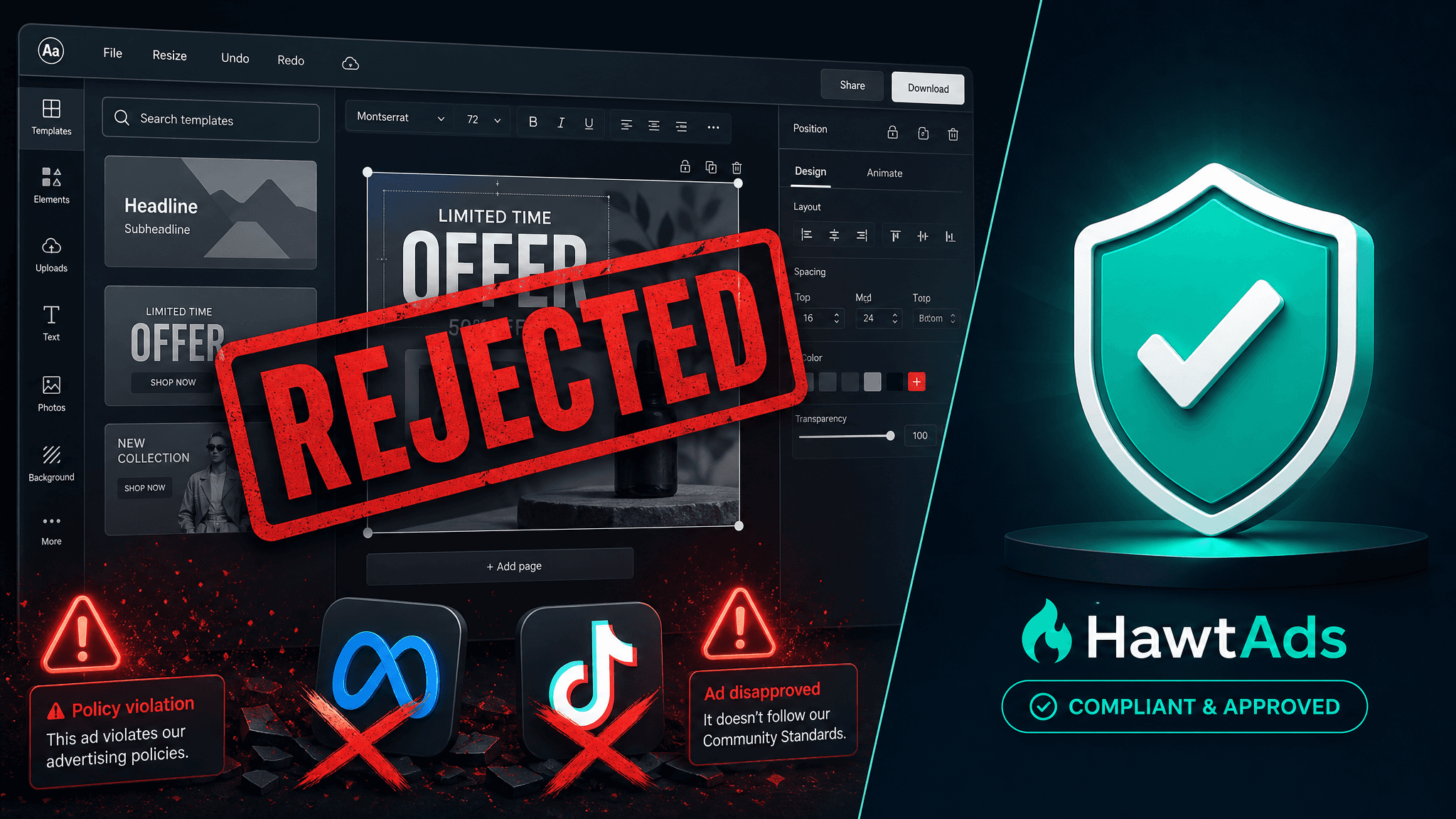
$200,000. That's the spend we watched evaporate across HawtAds customers in Q1 2026 — not from bad creative, not from weak targeting, but from five specific, recurring compliance mistakes. Each one is preventable in under 60 seconds. Most teams aren't doing it because they don't know the policy line until they've already crossed it. Here are the five, with the cost and the fix.
1. Missing Age-Gating Language on Restricted-Category Ads (~$42K Lost)
The Mistake: Failing to include mandatory legal disclaimers or age-verification language directly within the creative asset for restricted industries like alcohol, gaming, or financial services.
Real Example: One premium alcohol brand had 14 high-production video ads rejected in a single weekend. They had set their targeting to 21+, but they forgot to include the "Enjoy Responsibly" and "21+" text overlays in the first three seconds of the video. By the time the team realized the ads were "Rejected" on Friday evening, they had missed an entire holiday weekend of traffic, resulting in a massive spike in CAC when they finally scrambled to relaunch.
Why It Keeps Happening: Creative teams often focus on the aesthetic and the "hook." They view compliance text as "clutter" that ruins the conversion rate. There is a fundamental misunderstanding that platform targeting (setting the age to 21+ in Meta) replaces the need for on-screen disclosures. It doesn't. Algorithms scan the pixels, not just the settings. If the AI doesn't see the disclaimer, the ad is dead on arrival.
Knowing how to rate your ad creative before submission is the only way to catch these visual omissions before the platform's bot does.
The Fix: Always include the required legal disclaimer as a persistent overlay or within the first three seconds of any video asset in a regulated category.
→ HawtAds catches this automatically. Free trial.
2. Unsubstantiated Claims Triggering Policy Flags (~$38K Lost)
The Mistake: Using "puffery" or superlative language that the platform's AI interprets as a medical or financial promise that cannot be guaranteed.
Real Example: A health supplement SaaS company launched a campaign with the headline "The Only Way to Cure Your Brain Fog." Within 12 hours, their entire ad account was flagged for "Unacceptable Business Practices." The word "Cure" is a massive red flag for Meta and Google. They didn't just lose the spend on that ad; their entire account trust score plummeted, causing their other (compliant) ads to see a 30% increase in CPM.
Why It Keeps Happening: Copywriters are trained to be bold. In regulated industries, "bold" is often synonymous with "bannable." Many teams don't realize that 73% of ads in regulated industries get rejected specifically because of single-word triggers. They think they are being persuasive, but they are actually just triggering a "compliance pre-check" failure that halts their momentum.
The Fix: Back every superlative with a visible footnote or replace absolute claims like "Cure" or "Guaranteed" with softer, experience-based language like "Support" or "Designed for."
→ HawtAds catches this automatically. Free trial.
3. Landing Page Misalignment with Ad Promises (~$55K Lost)
The Mistake: This is the biggest silent killer. Your ad is compliant, but your landing page is not. Platforms now crawl the destination URL with the same scrutiny as the ad itself.
Real Example: A fintech startup ran a brilliant, compliant ad for a high-yield savings account. However, the landing page they linked to hadn't been updated in six months and still contained a legacy "Limited Time Offer" that had technically expired. Meta’s crawler flagged the "Misleading Content" policy because the ad’s promise of a specific rate didn't match the primary headline on the page instantly. They burned $55K in potential attribution before the "Account Disabled" notification hit their inbox.
Why It Keeps Happening: Marketing teams and Web teams often live in silos. The person buying the ads isn't the person updating the CMS. You know what's worse? You can have a perfect ad, but if the "Privacy Policy" link on your footer is broken, your ad gets rejected for "Low Quality Seed Page." It’s a technical trap that most B2B teams fall into because they focus only on the "creative" and ignore the "destination."
This is one of the most common pre-submission checks that prevent 80% of ad rejections, yet it is consistently ignored.
The Fix: Ensure your landing page copy, disclosures, and legal links mirror your ad's primary promise word-for-word and that all functional links are active.
→ HawtAds catches this automatically. Free trial.
4. Format-Specific Policy Violations (~$35K Lost)
The Mistake: Assuming that what works on Meta will work on TikTok or LinkedIn. Each platform has wildly different sensitivities to things like "Personal Attributes" or "Direct Address."
Real Example: A B2B insurance firm repurposed their successful Facebook "Static Image" ads into TikTok Spark Ads. On Facebook, the headline "Are you struggling with high premiums?" was acceptable. On TikTok, the AI flagged it immediately for "Directly Addressing Personal Attributes" (implying the user has a financial struggle). The campaign was shadow-banned, meaning the spend went out, but the reach was throttled to almost zero.
Why It Keeps Happening: Efficiency is the enemy of compliance. Teams want to "Create Once, Distribute Everywhere." But the "ad rejection causes" vary by platform. TikTok is much stricter on "negative sentiment" than Meta. LinkedIn is much stricter on "professional substantiation." If you don't adjust your "compliance pre-check" for each specific channel, you are essentially gambling with your budget.
The Fix: Maintain a platform-specific compliance checklist for every creative asset and never "cross-post" without a secondary policy review.
→ HawtAds catches this automatically. Free trial.
5. Slow Resubmission After Rejection (~$30K Lost)
The Mistake: Treating an ad rejection as a "task for Monday" rather than a "fire for right now." The compounding cost of lost lead flow is often higher than the cost of the ad itself.
Real Example: A lead-gen firm for legal services had their top-performing ad rejected on a Tuesday morning due to a "Sensitive Social Issues" flag (a false positive). The media buyer didn't check the dashboard until Thursday. By the time they appealed and got it reinstated, they had lost three days of peak-intent traffic. The hidden cost of ad rejections in this case wasn't just the $30K in unspent budget—it was the $100K in potential client retainers that went to their competitors who were still live.
Why It Keeps Happening: Most teams rely on platform emails to notify them of rejections. Here’s the frustrating part: those emails are often delayed by 4-6 hours, or they end up in a "Promotions" folder. Without a real-time alert system that bypasses the platform's slow notification cycle, you are always playing catch-up.
The Fix: Establish a 2-hour response window for all ad rejections and use an automated tool to alert your team the second a status changes.
→ HawtAds catches this automatically. Free trial.
Frequently Asked Questions
How do I know if my ads are at risk?
If you are in a regulated industry (Finance, Health, Alcohol, Real Estate, or Employment), 100% of your ads are at risk. Platforms use aggressive AI models to scan your creative for keywords and visual patterns. If your rejection rate is higher than 5%, your "Account Health" is likely declining, which leads to higher CPMs and eventual bans.
Can I run these checks myself?
Technically, yes. You can manually read the 40,000+ words of policy documentation for Meta, Google, and TikTok. However, policies change weekly. What was "compliant" last Tuesday might be a "violation" this morning. Manual checks are prone to human error—especially when you're trying to scale creative production.
How fast does HawtAds catch these?
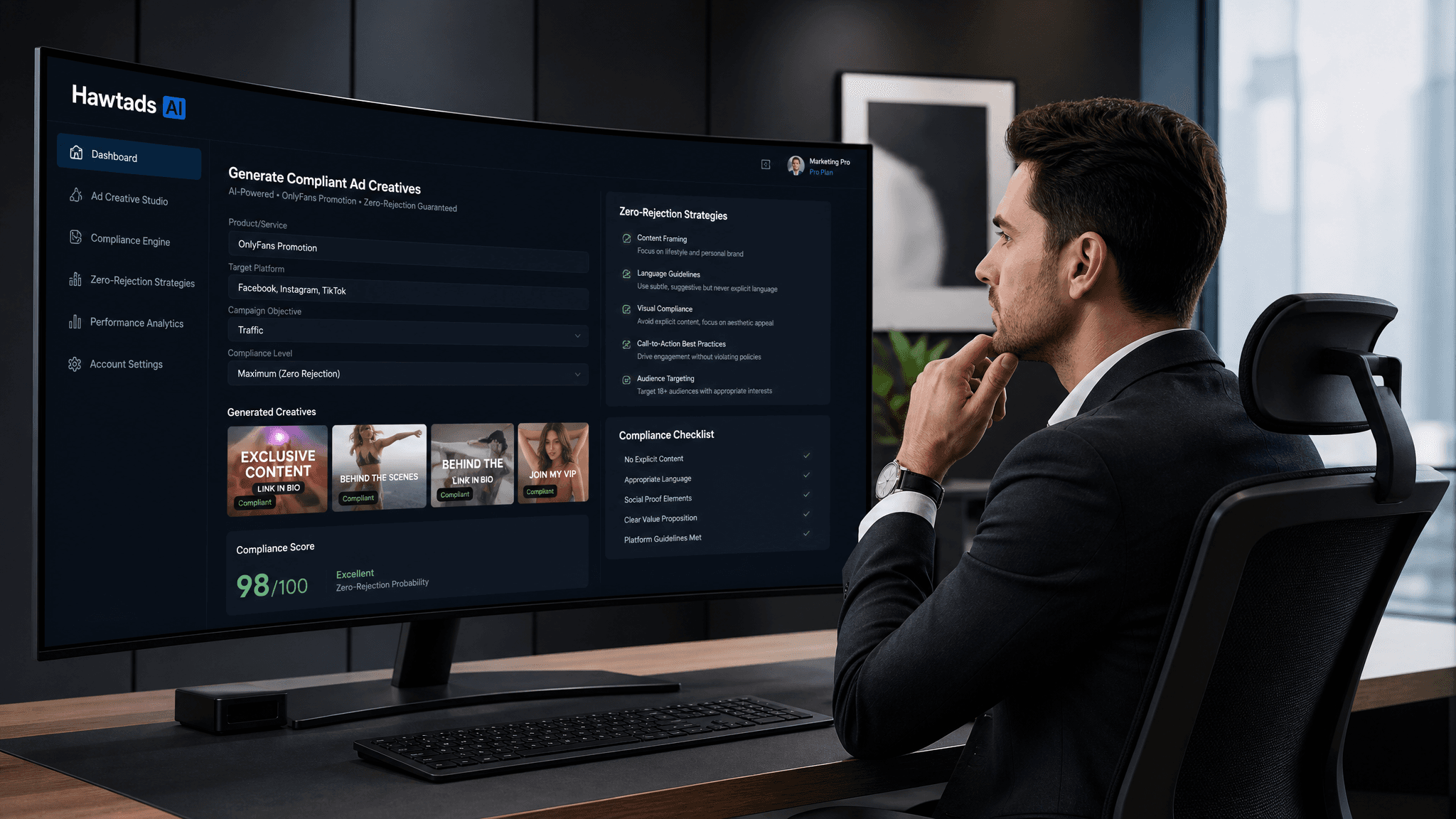
HawtAds runs a "Compliance Pre-Check" in under 15 seconds. Before you even upload your creative to the Ads Manager, our AI scans the image, video, copy, and landing page against the latest platform policies. We give you a "Risk Score" and the exact line of text or frame of video that needs to be changed.
P.S. We catch all five of these automatically before you submit. Trial is free for 7 days.