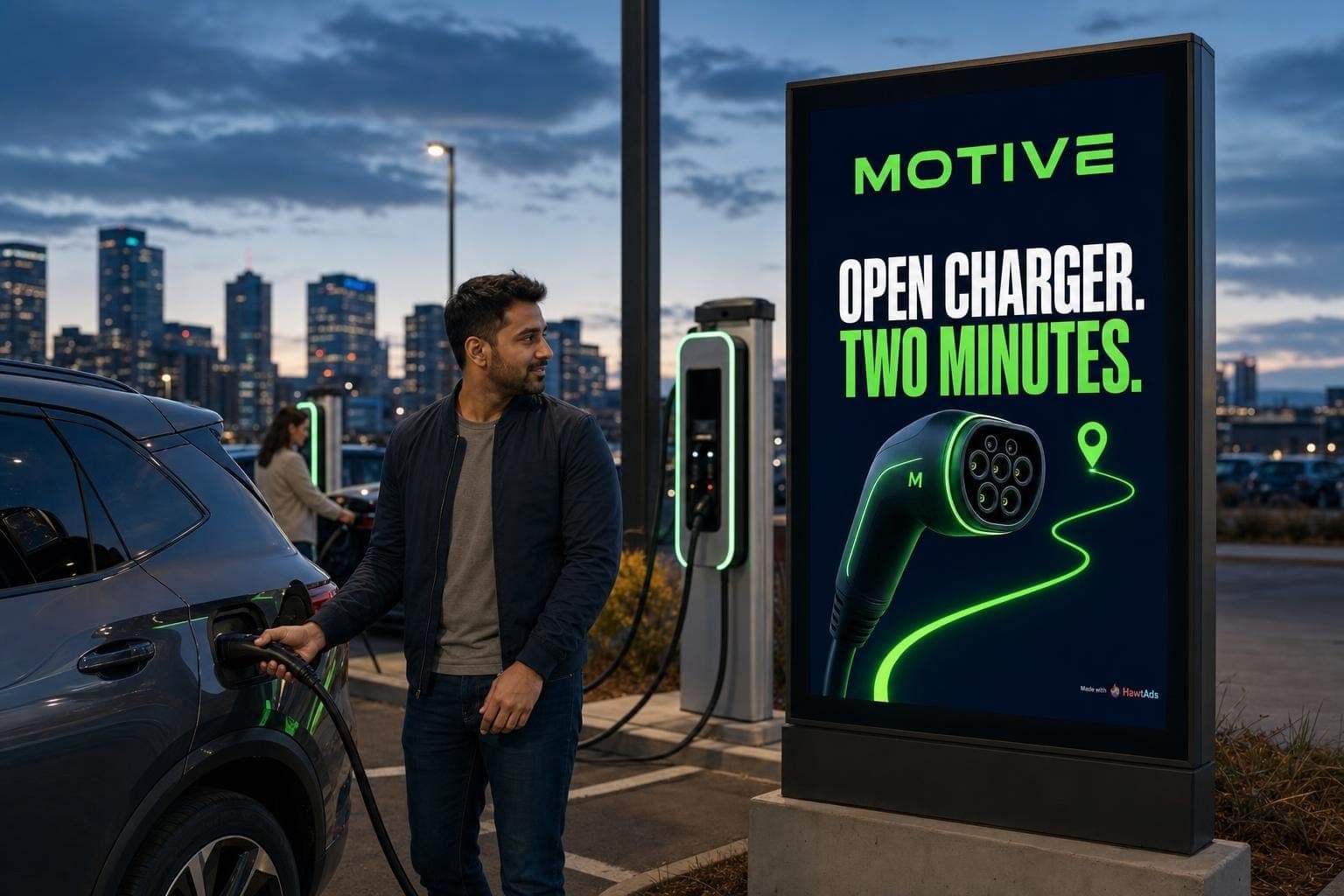
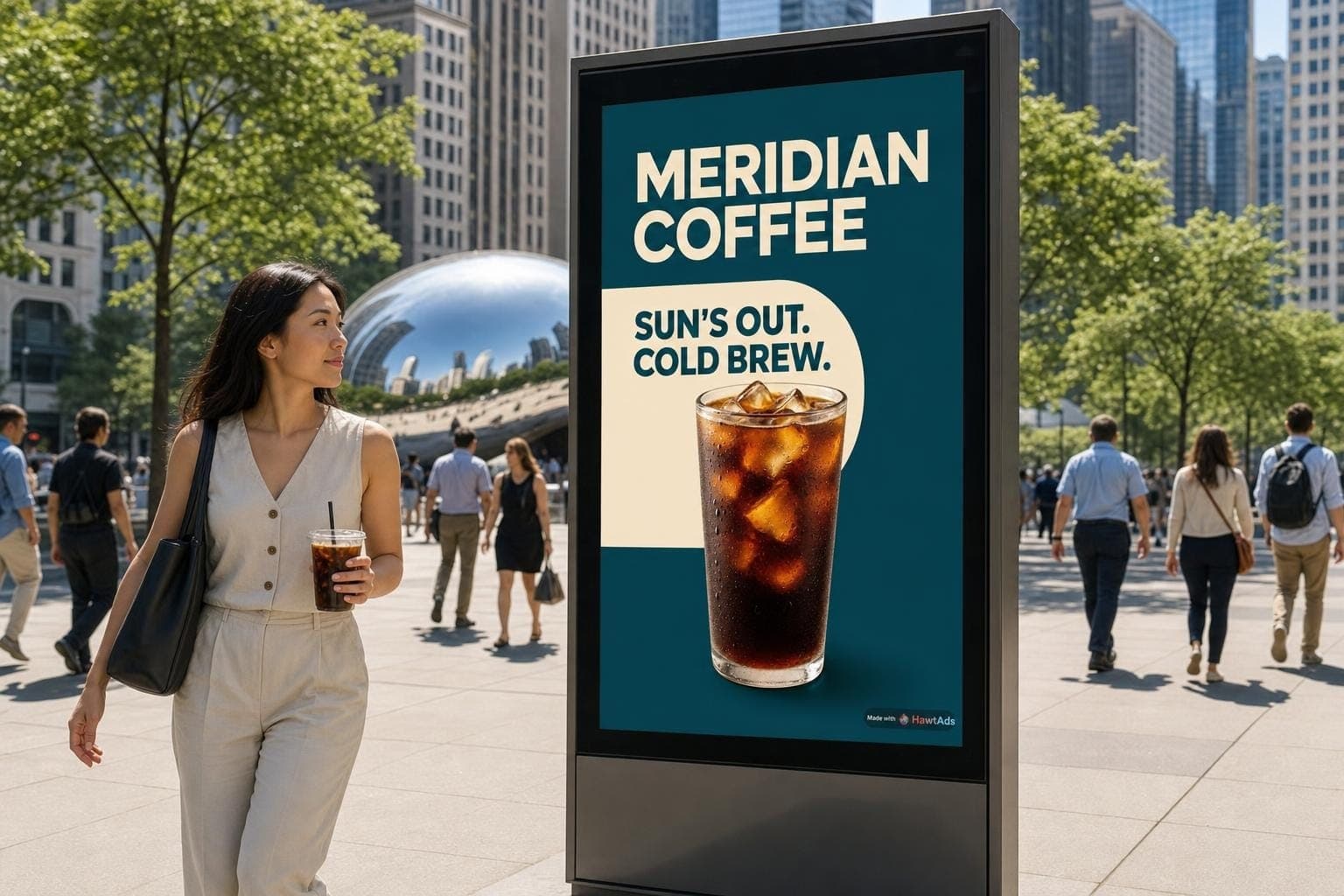
Personalization without the creep factor
DOOH can work with everything from weather and inventory to profiles and biometric signals. The key is matching the data, screen, and campaign.
A screen can know that rain has started. It can know that a flight is boarding, the lunch line is long, a product is in stock, or a rideshare trip is nearing the airport. With the right integrations, it can also work with a customer profile, loyalty status, trip details, audience composition, or biometric signals.
That range is what makes personalized DOOH interesting. It is also why a single rule for every screen and campaign rarely works. The commercial question is not whether personalization is good or bad. It is which input creates enough value to justify the integration, consent, security, creative, and compliance work around it.
The answer changes with the venue. A large screen facing a city block, a menu board inside a restaurant, a kiosk with an active user session, and a tablet facing one rider offer very different data and creative options.
This is part four of our DOOH series. If the transaction layer is still unfamiliar, start with how programmatic DOOH actually works.
Personalization covers more than identity
Context describes the setting around an ad. Identity connects the decision to a known or recognized person. Audience data sits between them. It may describe the likely makeup of a screen's audience without identifying a specific viewer.
A campaign can work with one or several layers:
- Place and time: venue, coordinates, direction of travel, daypart, event schedule, and local weather
- Operational context: inventory, wait time, service status, traffic, crowd level, and route disruption
- First-party context: an account, trip, loyalty state, preference, purchase history, or active session
- Audience and biometric inputs: measured audience composition, recognition, verification, or classification
The first two layers often come from media-owner or business systems. First-party context depends on the advertiser's customer relationship and the way the screen is being used. Biometric inputs add another technical and regulatory category, especially when a system creates or compares a template tied to a person's body.
The IAB's current DOOH definition recognizes both one-to-many and one-to-one environments. (IAB) That distinction is useful for marketers because it changes the amount of specificity the creative can carry. A public board might use venue and audience context. A private screen with an active customer session can support a named offer or a trip-specific message.
Each signal adds reach, precision, and requirements
Place and time are widely available and easy to explain. A stadium screen can change around game time. A restaurant display can move from breakfast to lunch. A board near an airport route can feature a travel product. These signals create broad relevance without needing a customer record.
Operational data brings the message closer to what the business can deliver. Inventory can suppress an unavailable item. A wait-time feed can change the promise in the ad. Weather can shift the product or visual treatment. The main operating questions are source ownership, update frequency, and fallback behavior when a feed becomes stale.
First-party data creates more addressable experiences. A loyalty relationship, booking, or signed-in kiosk session can influence the offer and message. These programs need a defined connection between the customer record and the screen session, plus campaign rules for what can appear in view of other people.
Biometric identification and classification can support recognition, measurement, security, access, or audience decisions. They also come with distinct accuracy, notice, consent, retention, and security considerations. The right setup depends on the purpose, the state, the venue, the vendor, and the customer relationship.
Each move toward individual addressability can add creative precision along with technical and compliance work.
What US marketers need to account for
The US does not have one national privacy rule that resolves every DOOH scenario. Federal enforcement, state privacy and biometric laws, contracts, venue policies, and industry principles can all affect a program. Teams need legal advice for the states and data uses in their actual deployment.
State requirements can differ in scope and mechanics. Washington's biometric identifier law addresses commercial enrollment, disclosure, retention, notice, consent, security, and defined exclusions. Texas Business and Commerce Code Chapter 503 has its own rules for capturing and using biometric identifiers. A campaign team should map the actual data flow and states involved before choosing the technical setup. (Washington RCW 19.375, Texas Business and Commerce Code Chapter 503)
At the federal level, the Federal Trade Commission's 2023 policy statement says the collection and use of biometric information can raise privacy, data-security, bias, and discrimination concerns under Section 5 of the FTC Act. The FTC lists foreseeable-harm assessment, risk mitigation, substantiation of accuracy claims, vendor oversight, notice, and data security among the factors it may consider when evaluating unfair or deceptive practices. (FTC policy statement)
The FTC's Rite Aid action provides an operating example. The agency alleged that a retail facial-recognition system produced false-positive matches and that the company did not adequately test, monitor, document, or address accuracy risks. The FTC finalized a modified order in March 2024 that included a five-year ban on using facial recognition for surveillance purposes. (FTC case record) The case concerned retail security rather than advertising, but the testing, substantiation, vendor, and notice issues are relevant to any marketer evaluating biometric technology.
OAAA's principles give the US out-of-home industry another reference point. They cover privacy by design, transparency, legitimate purpose, compliance with law, individual control, and protection of personally identifiable information. (OAAA) These are useful inputs for procurement and campaign requirements even when the media plan spans several states.
The screen changes the data model
Public, one-to-many displays can reach large groups, which is often the point of buying them. The creative also appears in shared view. Marketers can use location, timing, venue, audience, or other available signals while setting message rules for that visibility.
Indoor shared screens have a narrower setting and may be closer to business operations. A retailer can connect stock and promotion data. A workplace screen can use building context. A restaurant can connect its menu and service state. The screen is still visible to more than one person, so the campaign brief needs to define which customer details can appear.
Private and one-to-one screens open a different creative space. A rideshare tablet, active kiosk session, or account-linked display can connect the message to a trip, user, or loyalty relationship. The session boundary becomes important. The system needs to know when it starts, which inputs are available, what consent applies, and when to clear the screen for the next person.
These are not three levels of marketing quality. They are three media products. Each can support strong personalization when the signal and message fit the setting.
Google's current Display & Video 360 documentation offers a useful example on measurement. Google says it receives aggregated publisher impression multipliers rather than user-specific measurement data from DOOH suppliers. It also advises buyers to understand each supplier's measurement method and applicable consent obligations. (Google) Other technology and supply paths may use different inputs, which is why the data flow belongs in the media and vendor review.
Put a signal brief next to the creative brief
Marketers already define audience, message, offer, format, and budget. Personalized DOOH benefits from a short signal brief that makes the data assumptions equally clear.
For each input, capture the source, campaign purpose, owner, refresh rate, retention window, permitted uses, screen classes, and fallback. Add any notice, consent, state-law, contract, or venue requirements identified by the team. Then define what the signal can change. Inventory might change product eligibility. A trip stage might change the call to action. A customer profile might change the offer. A recognition event might open a one-to-one experience.
This turns a vague request for personalization into a buildable campaign. It also gives creative, media, data, legal, and operations teams the same map.
The HawtAds Ads Engine uses that kind of structure to move from signals to a finished ad. It evaluates the available context and campaign rules, chooses the eligible message, generates the screen-ready composition, and keeps a record of the creative decision. Brand rules, exclusions, and sensitive-category checks run inside the same flow.
The order matters. Data access and campaign eligibility are resolved before a signal changes the creative. The final ad is checked as an output. Delivery, attribution, and player-level fallback connect through the campaign's media stack.
For a marketer, the result is a campaign that can start with location and time, add richer first-party or audience inputs when they improve a real decision, and keep the variations inside one review trail.
See how the HawtAds Ads Engine turns live signals into screen-ready creative. For the broader launch, try HawtAds free to make paid-social, feed, story, display, and app-store assets from the same campaign.
Frequently asked questions
Does personalized DOOH require facial recognition?
No. DOOH campaigns can personalize around location, time, weather, inventory, venue, trip stage, audience information, first-party profiles, biometric signals, or a combination. The media setting and campaign goal determine which inputs are useful.
What is the difference between contextual and identity-based DOOH?
Contextual DOOH changes creative using information about the placement or moment. Identity-based DOOH connects the decision to a known or recognized person. Audience data can sit between them by describing a group or likely screen audience.
Which signal should a DOOH campaign start with?
Start with the input that changes a real customer or operating decision. Time and location are often enough. Add inventory, service status, first-party data, or biometrics when the added precision supports the campaign goal and the team can run the required integration, notice, consent, security, and review process.
Sources
- Federal Trade Commission: Policy Statement on Biometric Information and Section 5
- Federal Trade Commission: Rite Aid case record
- Washington Legislature: Chapter 19.375 RCW
- Texas Legislature: Business and Commerce Code Chapter 503
- OAAA: Principles for Privacy and Data
- IAB: Digital Out-of-Home Definition and Core Features
- Google Display & Video 360: Purchase digital out-of-home inventory