The True Cost of Ad Creative: Designer vs. AI vs. DIY in 2026
If you are a marketer, startup founder, or social media manager, you already know the most exhausting part of running digital campaigns: feeding the content beast. The modern advertising landscape demands a relentless stream of fr…
If you are a marketer, startup founder, or social media manager, you already know the most exhausting part of running digital campaigns: feeding the content beast. The modern advertising landscape demands a relentless stream of fresh, engaging, and highly targeted creatives. Yet, for many small-to-medium businesses (SMBs), the process of generating these assets remains stuck in the past.
You stare at a blank canvas. You write dozens of copy variations. You wait days for a freelance designer to return a single graphic, only to realize it doesn't quite fit your brand guidelines or the specific dimensions required by Facebook, LinkedIn, or TikTok. By the time your ad is finally live, you are already behind schedule, and your budget is significantly depleted.
It is time to stop creating ads from scratch. The era of manual, pixel-by-pixel ad creation is rapidly giving way to a smarter, faster, and infinitely more scalable approach: AI-automated creative production. By leveraging artificial intelligence, forward-thinking brands are not just speeding up their workflows; they are fundamentally transforming how they test, scale, and optimize their ad campaigns.
The Hidden Costs of Manual Ad Creation
Before we dive into the AI revolution, we have to address the elephant in the room: the traditional creative workflow is broken. For most startups and SMBs, the process of launching a new ad campaign looks something like a chaotic relay race.
First, there is the strategy and copywriting phase. A marketer spends hours researching pain points, drafting headlines, and writing primary text. Then, the baton is passed to a designer. The designer spends days sourcing stock images, creating custom illustrations, and formatting the ad for different platforms. Feedback loops ensue. Revisions are made. Approvals are delayed.
This manual process incurs massive hidden costs that go far beyond the hourly rate of your creative team:
- The Time Tax: The average creative turnaround time for a single ad variation can range from 3 to 7 days. In the fast-paced world of digital marketing, a week is a lifetime. By the time your ad is live, the trend you were trying to capitalize on may have already passed.
- The Cost of Asset Production: High-quality design work is expensive. Whether you are paying an in-house designer, a freelancer, or an agency retainer, the cost per asset can quickly eat into your actual ad spend budget.
- Creative Fatigue and Burnout: Social media algorithms demand volume. If you are running ads on Meta or TikTok, you need to refresh your creatives every few weeks to combat ad fatigue. Forcing a small team to manually churn out dozens of variations leads to creative burnout and a drop in quality.
- Testing Bottlenecks: The secret to successful user acquisition is A/B testing. But you cannot test 20 different visual concepts if you only have the budget and time to design three. Manual production severely limits your ability to find winning combinations.
Enter AI: The New Era of Automated Creative Production
Artificial intelligence is no longer a futuristic buzzword; it is a practical, everyday tool that is reshaping the marketing landscape. AI-automated creative production refers to the use of machine learning models to generate, resize, and optimize ad copy and visuals at scale.
Instead of starting with a blank canvas, marketers can now start with a prompt, a brand guideline, or a simple product URL. The AI acts as your tireless, ultra-fast creative assistant, instantly generating dozens of high-quality ad variations tailored to your specific audience and platform requirements.
This shift from pixel-pushing to creative direction is profound. It allows marketers to focus on what they do best: strategy, audience targeting, and data analysis. The AI handles the heavy lifting of execution.
How AI Tools Generate Ad Creatives at Scale
To truly appreciate the power of AI in your workflow, it helps to understand how these tools actually function under the hood. Automated creative production typically involves three core AI technologies working in harmony:
1. Large Language Models (LLMs) for Ad Copy
Writing compelling ad copy requires a deep understanding of human psychology, persuasion, and platform-specific best practices. AI models are trained on millions of successful ads, allowing them to generate highly effective copy in seconds.
Modern AI tools can instantly produce multiple variations of primary text, headlines, and descriptions based on a single product description. Want an aggressive, FOMO-driven hook for a retargeting campaign? Or an educational, story-driven caption for top-of-funnel awareness? AI can generate both, perfectly matching your brand voice.
2. Generative Visual AI for Imagery
Visuals are the most critical component of any ad. They are what stop the scroll. Generative AI models can create stunning, photorealistic images, custom illustrations, or stylized graphics based on text prompts.
More importantly, specialized ad-generation AI doesn't just create random art; it composes ads. It understands the principles of visual hierarchy, placing your product front and center, leaving negative space for text overlays, and applying color palettes that drive conversions.
3. Automated Formatting and Resizing
One of the most tedious parts of manual ad creation is resizing a single concept into a 1:1 square for Instagram feeds, a 9:16 vertical for TikTok, and a 1.91:1 landscape for LinkedIn. AI automation handles this instantly. It intelligently crops and rearranges elements to ensure the ad looks native and professional on every single placement, saving hours of tedious formatting work.
Real ROI: The Numbers Behind AI-Generated Creatives
Adopting AI is not just about adopting new technology for the sake of it; it is about driving measurable business results. Brands that transition from manual production to AI-automated workflows are seeing staggering improvements in their return on investment (ROI).
Let's look at the data driving this shift:
- 80% Reduction in Production Time: Tasks that used to take a week are now completed in hours. Marketers report saving an average of 15 to 20 hours per week on creative ideation and formatting alone.
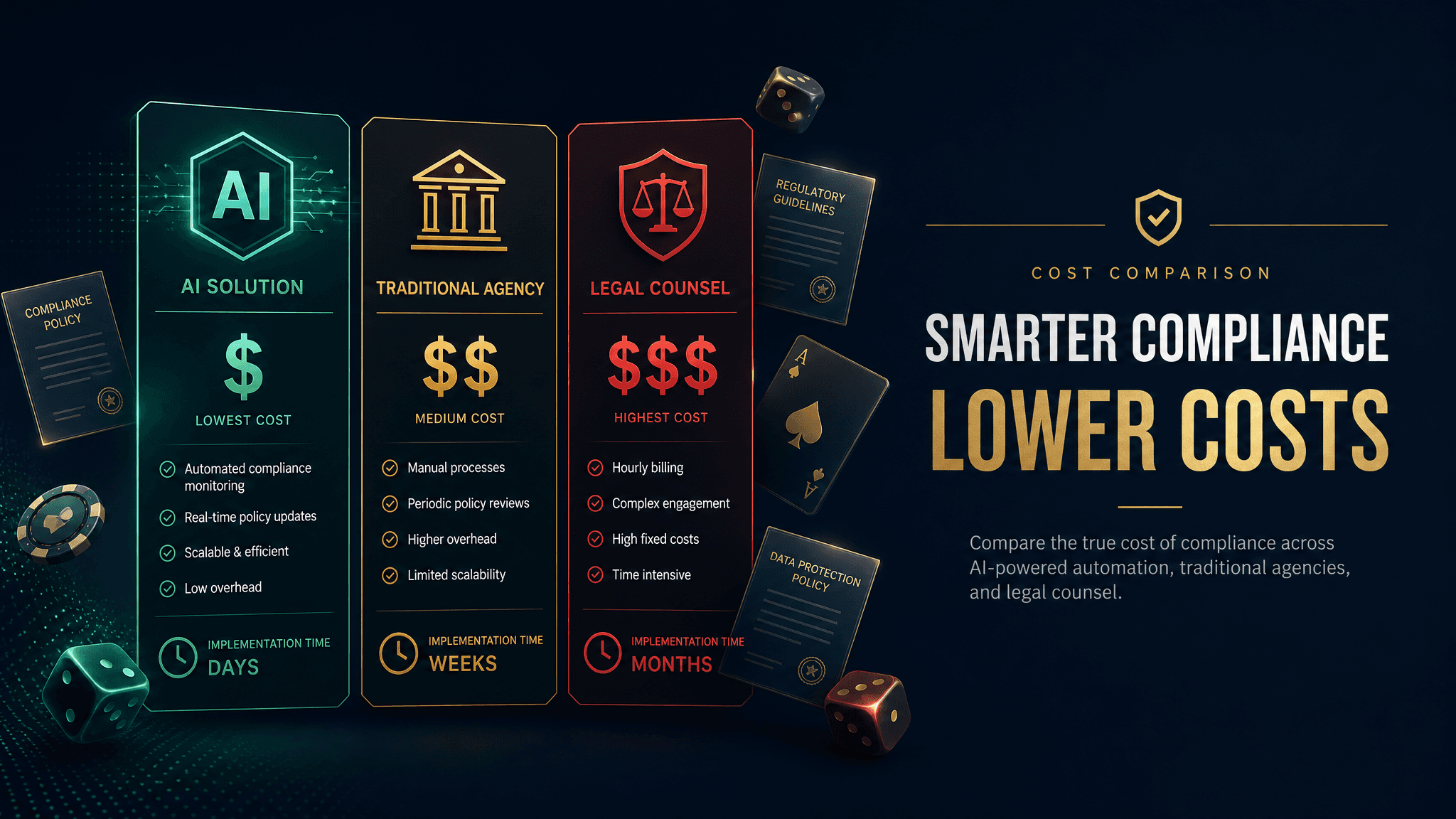
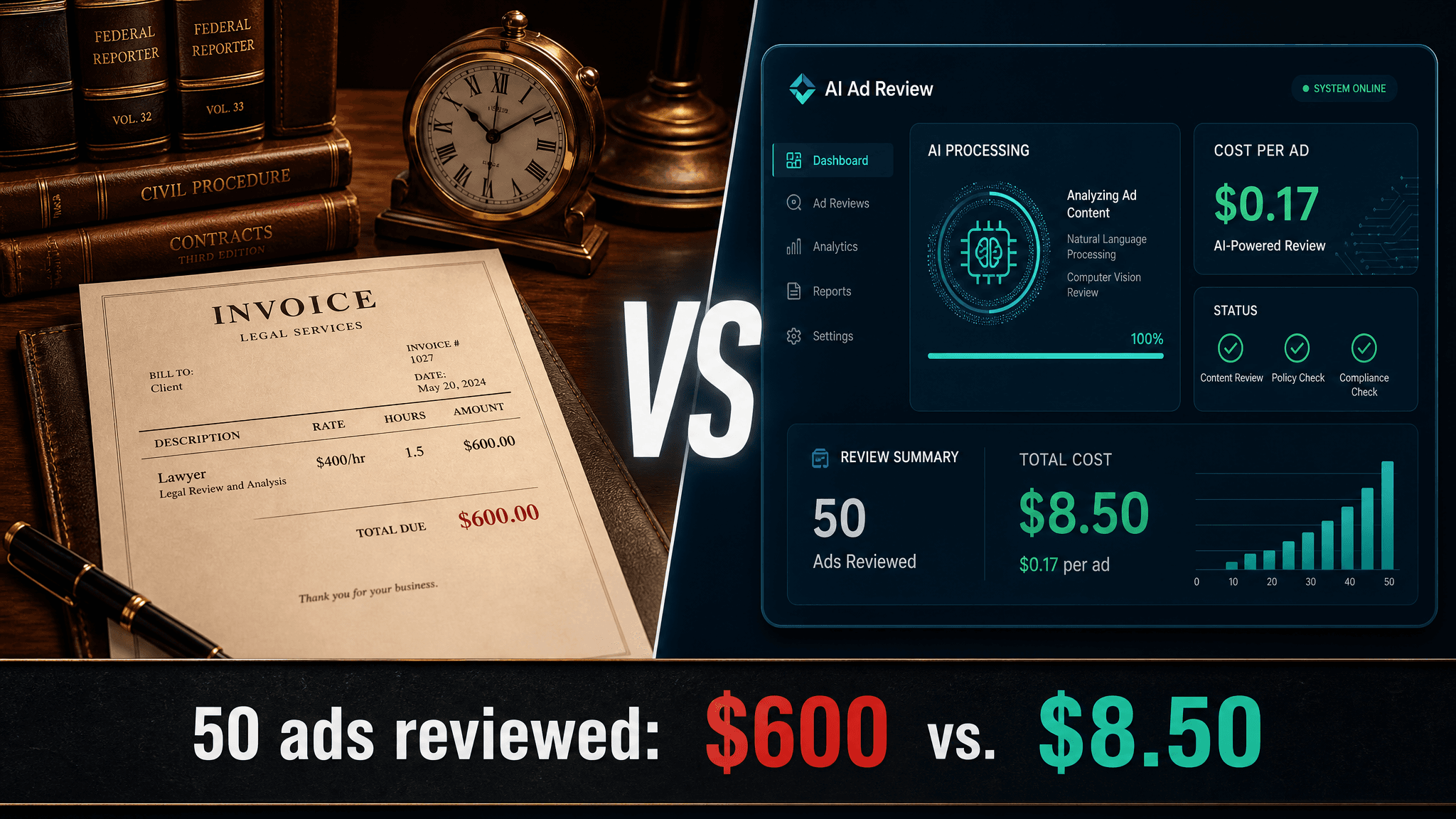
- Up to 70% Decrease in Creative Costs: By reducing the reliance on expensive external agencies for routine asset generation, SMBs and startups are reallocating those funds directly into their ad spend, driving more traffic and sales.
- 3x Increase in Testing Volume: Because AI makes it virtually free to generate a new variation, brands are launching three times as many A/B tests. They are testing different emotional triggers, color schemes, and layouts simultaneously.
- 30-50% Lower Cost Per Acquisition (CPA): More testing leads to faster discovery of winning ads. When you find the perfect combination of image and copy, your click-through rates (CTR) skyrocket, and the platforms reward you with a significantly lower CPA.
The math is simple: lower production costs plus higher performing ads equals a massive boost to your bottom line.
Integrating AI into Your Existing Content Workflow
A common misconception is that AI replaces the human marketer. In reality, the most successful brands use AI to augment their existing teams. This is known as a "Human-in-the-Loop" (HITL) workflow. AI provides the speed and scale, while the human provides the strategy, taste, and final quality control.
Here is how you can seamlessly integrate AI into your daily marketing operations without losing your unique brand identity:
Shift Your Role from Creator to Curator
Instead of spending your morning writing five headlines, spend ten minutes prompting the AI to generate fifty headlines. Then, use your marketing expertise to curate the top five that perfectly align with your campaign goals. You become an editor and a creative director, elevating the overall quality of your output.
Feed the AI with Strong Brand Guidelines
AI is only as good as the context you provide. To ensure your automated creatives don't look generic, you must feed the system with your brand DNA. Input your hex codes, upload your official logos, provide examples of your past high-performing ads, and define your brand voice (e.g., "authoritative but approachable," "witty and fast-paced").
Embrace Rapid Iteration
If an AI-generated image is 80% of the way there, don't discard it. Use it as a base. Tweak the prompt, ask the AI to adjust the lighting, or simply swap out the headline. The beauty of automation is that iterations cost seconds, not days.
Step-by-Step Implementation: Building Your AI Creative Engine
Ready to stop creating ads from scratch? Transitioning to an automated workflow requires a strategic approach. Follow this step-by-step guide to build an AI creative engine that drives results for your startup or SMB.
Step 1: Audit Your Current Creative Bottlenecks
Start by analyzing your last three ad campaigns. Where did the process slow down? Was it waiting for copy approvals? Was it resizing images for Instagram Stories? Did you fail to launch enough variations because of budget constraints? Identifying your specific bottlenecks will help you choose the right AI solutions.
Step 2: Define Your Core Campaign Variables
Before generating anything, map out what you actually need to test. A good rule of thumb for a new campaign is to test three distinct visual concepts against three distinct copy angles. Write down the core value propositions, target audience pain points, and desired calls-to-action. These will form the foundation of your AI prompts.
Step 3: Leverage an All-in-One AI Platform
While you could stitch together a patchwork of different AI tools (one for text, one for images, one for resizing), this often creates a new kind of "Frankenstein" workflow that defeats the purpose of automation. Instead, opt for an integrated platform designed specifically for ad generation. You want a tool that understands the context of digital advertising, not just general image creation.
Step 4: Generate, Review, and Refine
Input your brand assets and campaign variables into your chosen platform. Let the AI generate the initial batch of creatives. Review them critically. Ensure the text is legible, the product is clear, and the messaging aligns with your brand. Make any necessary tweaks within the platform.
Step 5: Launch, Learn, and Feed the Loop
Launch your AI-generated ads across your chosen networks. Monitor the data closely. Because you have generated a wide variety of assets, you will quickly see which angles resonate with your audience. Take those insights—the winning colors, the high-converting headlines—and feed them back into the AI for your next generation cycle. Your AI engine will get smarter and more effective with every campaign.
Why HawtAds is Your Ultimate AI Creative Partner
As the market floods with generic AI tools, marketers are realizing that simply generating an image is not enough. An ad must be strategically sound, properly formatted, and—crucially—compliant with strict advertising policies. This is where HawtAds changes the game.
HawtAds is built specifically for modern marketers, startup founders, and agencies who need to move fast without breaking things. We combine state-of-the-art AI creative generation with robust, compliant campaign delivery.
AI Generation Meets Unbreakable Compliance
One of the biggest risks of using standalone generative AI is that the resulting ad might violate platform policies (Meta, Google, TikTok), leading to rejected ads or, worse, banned ad accounts. HawtAds solves this by integrating compliance checks directly into the workflow. Our platform ensures that the high-converting copy and stunning visuals generated by our AI adhere to platform guidelines, keeping your campaigns running smoothly.
End-to-End Automation
With HawtAds, you don't just generate an image and download it. You manage the entire lifecycle. From inputting your product URL to generating hyper-targeted copy, creating beautiful visuals, and automatically formatting them for every placement, HawtAds acts as your dedicated, in-house creative agency.
Data-Driven Optimization
Because HawtAds understands both the creation and the delivery of your ads, it helps bridge the gap between creative output and performance data. You can rapidly scale the creatives that work and instantly pivot away from the ones that don't, all within a single, intuitive dashboard.
Conclusion: Reclaim Your Time and Scale Your Growth
The days of staring at a blank screen, agonizing over a single ad graphic, and draining your budget on slow manual production are over. AI-automated creative production is not just a shortcut; it is a strategic advantage. It allows SMBs and startups to compete with massive enterprise budgets by unlocking unprecedented speed, scale, and testing capabilities.
By shifting your workflow from manual creation to AI-powered curation, you can reclaim dozens of hours each week, drastically reduce your cost per acquisition, and finally keep up with the relentless demand for fresh content.
Stop creating ads from scratch. Embrace the power of AI, empower your marketing team, and let platforms like HawtAds turn your creative bottlenecks into your biggest competitive advantage. Your next high-converting campaign is just a few clicks away.